
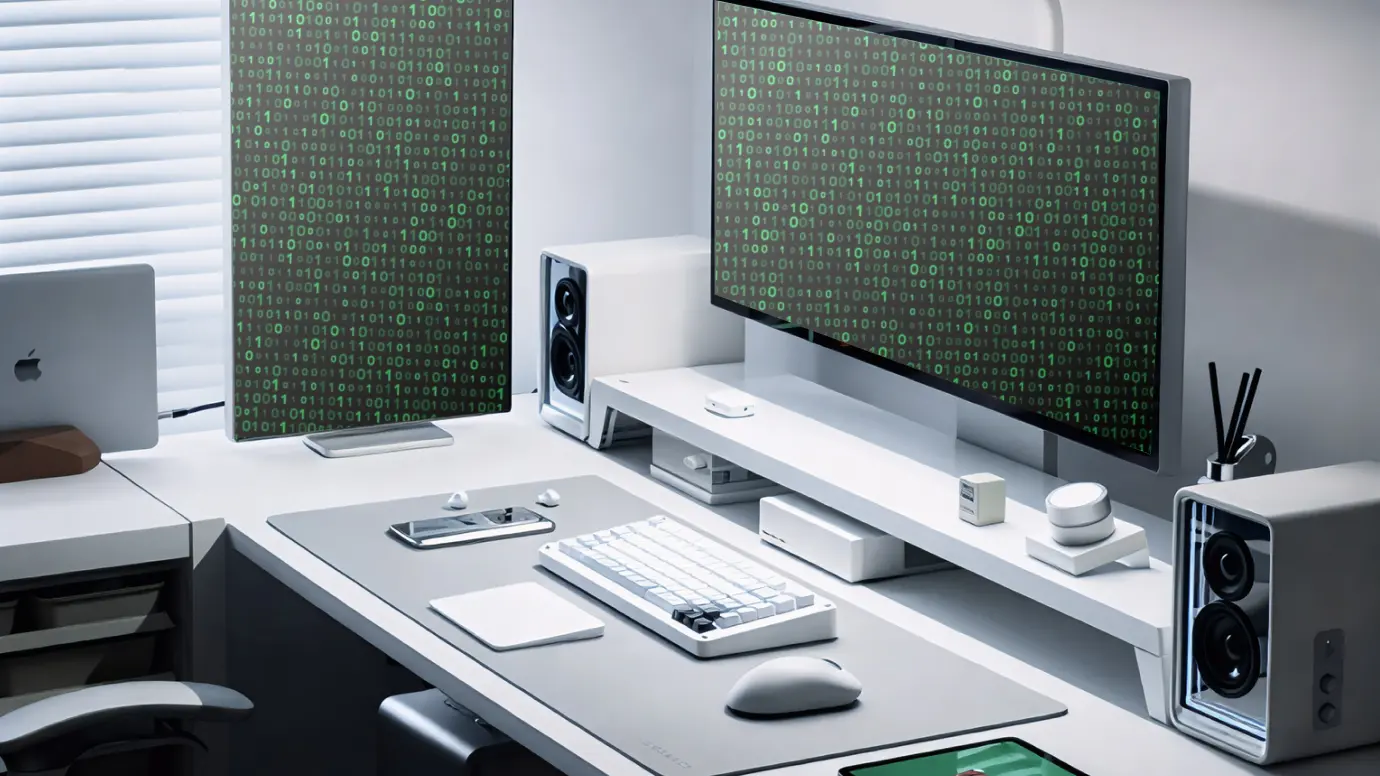

Imagine you have a high-stakes, demanding workday ahead — analyzing complex data structures or fine-tuning a new machine learning strategy. Where would you truly excel: squeezed into a cluttered corner of your living room or in a dedicated, ergonomically sound workspace?
Remote work productivity depends on more than just your years of experience or technical expertise; it is deeply rooted in your physical environment. While the dream of a “spaceship campus” like Apple Park remains a reality for a few, the modern workforce has shifted the battlefield. In 2026, your “corporate campus” is your own home office. To maintain the professional standards required by a managed workforce, your environment must mirror the precision of the results you deliver.
Why Infrastructure is the New “Spaceship Campus”
Tech giants like Google and Facebook invested billions in creating “spaceship” campuses to boost staff output through physical perks. However, for the modern professional, infrastructure has evolved. It is no longer about office swimming pools or zero-gravity naps; it is about the personal tools and environment that enable deep focus and flawless execution. In the era of decentralized teams, your personal setup is what determines the speed and quality of your professional delivery.
Most companies are still not ready to optimize the monotone office environment, which is what pushed many high-performing individuals toward a remote setup. But the freedom of remote work comes with a significant responsibility: creating a space where “work” and “home” coexist without sabotaging each other. Your physical “infrastructure” — your workstation, your hardware, and your environment—is now the foundation of your career.
The Managed Workforce Standard: 5 Pillars of Remote Work Productivity
To maintain high remote work productivity over the long term, it is not enough to simply have a laptop and a steady connection. A professional approach to workspace organization is built on five core principles that transform an ordinary room into a high-performance operations center.
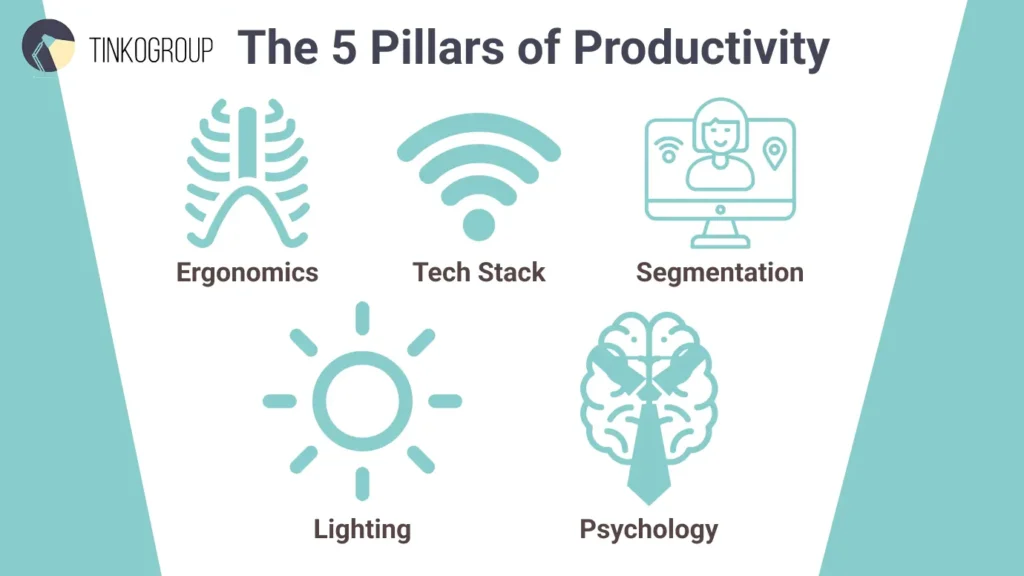
1. Ergonomics over Aesthetics
It is a common mistake to spend thousands on interior design while counting pennies on a desk or chair. This is a strategic error. Poor ergonomics leads to more than just physical discomfort; it causes rapid cognitive fatigue and a sharp decline in concentration. A professional-grade chair with proper lumbar support and a desk at the correct height allows you to work for hours without losing focus. Your body should never distract your brain from complex analytical tasks.
2. Tech Stack and Seamless Connectivity
In 2026, your internet connection is your professional lifeline. High-level remote work requires more than just “having Wi-Fi”; it demands a stable, high-speed connection with minimal latency. Beyond the hardware, digital hygiene is critical. Regularly updating software and using reliable security tools ensures that your flow state isn’t broken by technical glitches. When your technology works seamlessly, your mental energy remains focused on delivery rather than troubleshooting.
3. Deliberate Space Segmentation
One of the greatest challenges of working from home is the blurring of lines between rest and labor. To avoid cognitive overload, top-tier professionals segment their living space. Even if you do not have a dedicated room, having a clearly defined “work territory” is essential. This creates a psychological anchor: when you sit at that specific desk, your brain automatically switches into deep-work mode, signaling that the personal day has ended and the professional day has begun.
4. Lighting and Sensory Control
Lighting directly affects cortisol levels and the brain’s ability to process visual information. The gold standard is a combination of natural daylight and high-quality, flicker-free artificial lighting that avoids glare on your screens. Equally important is auditory control. Whether it is through noise-canceling headphones or acoustic treatments, creating a quiet zone allows you to maintain maximum intellectual output regardless of your external surroundings.
5. Psychological Boundaries and Routine
Perhaps the biggest secret to sustained efficiency is moving beyond the “pajama culture.” While working in loungewear seems attractive, it often leads to subconscious relaxation and a lack of urgency. Establishing a professional routine — including dressing for work and adhering to a strict schedule—keeps the mind sharp. You must prepare yourself for the workday as meticulously as if you were heading into a world-class corporate headquarters.
Home Office vs. Coworking: Which is Better for Scaling AI Projects?
When it comes to optimizing remote work productivity, one of the most debated topics is the choice of location. Should you cultivate a private sanctuary at home, or should you immerse yourself in the high-energy environment of a co-working space? For those involved in scaling complex AI and data projects, the answer depends on the balance between social needs and technical requirements.
The Home Office: The Sanctuary of Deep Work
The primary advantage of a home office is total control. In a private setting, you can eliminate the unpredictable distractions of a public space. This is critical for tasks that require intense cognitive load, such as complex data modeling or auditing thousands of data points for accuracy.
- Customization: You can calibrate your lighting, temperature, and acoustics to your exact preferences.
- Security: For projects involving sensitive intellectual property, a private network is often easier to secure, meeting the standards of a GDPR-compliant data company.
- Cost-Efficiency: Eliminating the commute and membership fees allows for more investment in high-end hardware and professional-grade furniture.
The Coworking Space: The Catalyst for Networking
Coworking spaces were designed to solve the “isolation trap” of remote work. They offer a professional atmosphere that many find more motivating than their living room.
- Community and Networking: Shared zones provide opportunities for spontaneous collaboration and “water cooler talks” that can lead to new ideas and partnerships.
- Operational Readiness: These spaces come with built-in infrastructure—uninterruptible power supplies, high-speed backup internet, and meeting rooms for client calls.
- Mental Boundaries: Physically leaving your home to go to a “place of work” can help establish a powerful psychological boundary that boosts focus during working hours.
The Verdict for AI Scaling
If your work requires extreme precision and absolute data privacy, a well-organized home office is usually the superior choice. However, if your project is in a creative brainstorming phase or you find that isolation is draining your energy, a coworking space can provide the necessary “spark.” Many top-tier professionals now adopt a hybrid model, using the home office for deep execution and the coworking space for meetings and networking.
Psychology of Space: Colors, Plants, and Lighting
The environment you inhabit acts as a silent driver for remote work productivity. You do not need a multi-billion dollar corporate campus to trigger high-level cognitive performance; often, the most significant improvements come from small, scientifically-backed changes to your immediate surroundings. By understanding how sensory input affects the brain, you can design a space that actively supports deep focus and reduces mental fatigue.
The Strategic Use of Color
Color is more than an aesthetic choice; it is a psychological tool. Different wavelengths of light stimulate the brain in unique ways. Blue and green hues help lower the heart rate and are ideal for tasks like data annotation that require long hours of steady concentration. They help lower the heart rate and are ideal for tasks that require long hours of steady, focused concentration. On the other hand, if your work involves creative brainstorming or rapid problem-solving, hints of yellow can stimulate the nervous system and encourage optimism. If you find your energy flagging during mid-afternoon slumps, strategic touches of red can provide a temporary physiological boost to help you push through tight deadlines.

Reliable Data Services Delivered By Experts
We help you scale faster by doing the data work right - the first time

Biophilia and Cognitive Recovery
The concept of “biophilia” suggests that humans have an innate tendency to seek connections with nature. Integrating greenery into your workspace is one of the simplest ways to boost your mental well-being. Studies have shown that even a single plant on a desk can reduce stress levels and increase productivity. Plants act as visual “relief points”—when you look away from your screen to rest your eyes, a natural element helps the brain recover from directed attention fatigue faster than a blank wall. For a low-maintenance professional setup, consider succulents, air plants, or Marimo Moss Balls, which provide freshness without requiring constant care.
Mastering Light and Vision
Lighting is perhaps the most critical environmental factor for anyone working in the tech industry. The brain’s circadian rhythm is highly sensitive to light quality. While natural daylight is the gold standard for maintaining alertness and mood, it is not always available. To optimize your space, you should aim for a “layered” lighting approach. Avoid harsh overhead lights that create shadows. Instead, use ambient lighting to fill the room and a dedicated task lamp to illuminate your desk surface. Ensuring that your monitor is positioned to avoid glare will prevent the micro-strains that lead to end-of-day headaches and decreased accuracy.
The “Clean Mess” Balance
There is a long-standing debate between the proponents of a “minimalist desk” and those who prefer a “creative mess.” While a clean workspace reduces visual noise and helps the mind stay organized, some psychological research suggests that a slightly cluttered environment can actually foster unconventional thinking and new ideas. The key is to find your personal equilibrium. If your “light mess” consists of inspirational quotes, meaningful photos, or project sketches that motivate you, it can be a powerful asset. However, if the clutter becomes a source of distraction, it is time to return to a more structured organization.
Conclusion: Create Your Own Productive Space
There is no one-size-fits-all blueprint for the perfect workspace. The ultimate goal of optimizing your environment is to ensure that your physical surroundings never become a bottleneck for your professional potential. Whether you thrive in a minimalist home office or the bustling energy of a co-working hub, your space should align with your lifestyle and the specific demands of your projects.
At Tinkogroup, we believe that professional results are a direct product of professional environments. We empower our distributed teams to build workspaces that prioritize accuracy, speed, and reliability. By taking control of your remote work productivity today, you aren’t just rearranging furniture—you are building the infrastructure for your future success.
Ready to see what a professional managed team can do for you? Don’t let management overhead or inconsistent quality slow down your innovation. Experience the peak of remote efficiency by partnering with a team that values precision as much as you do.