
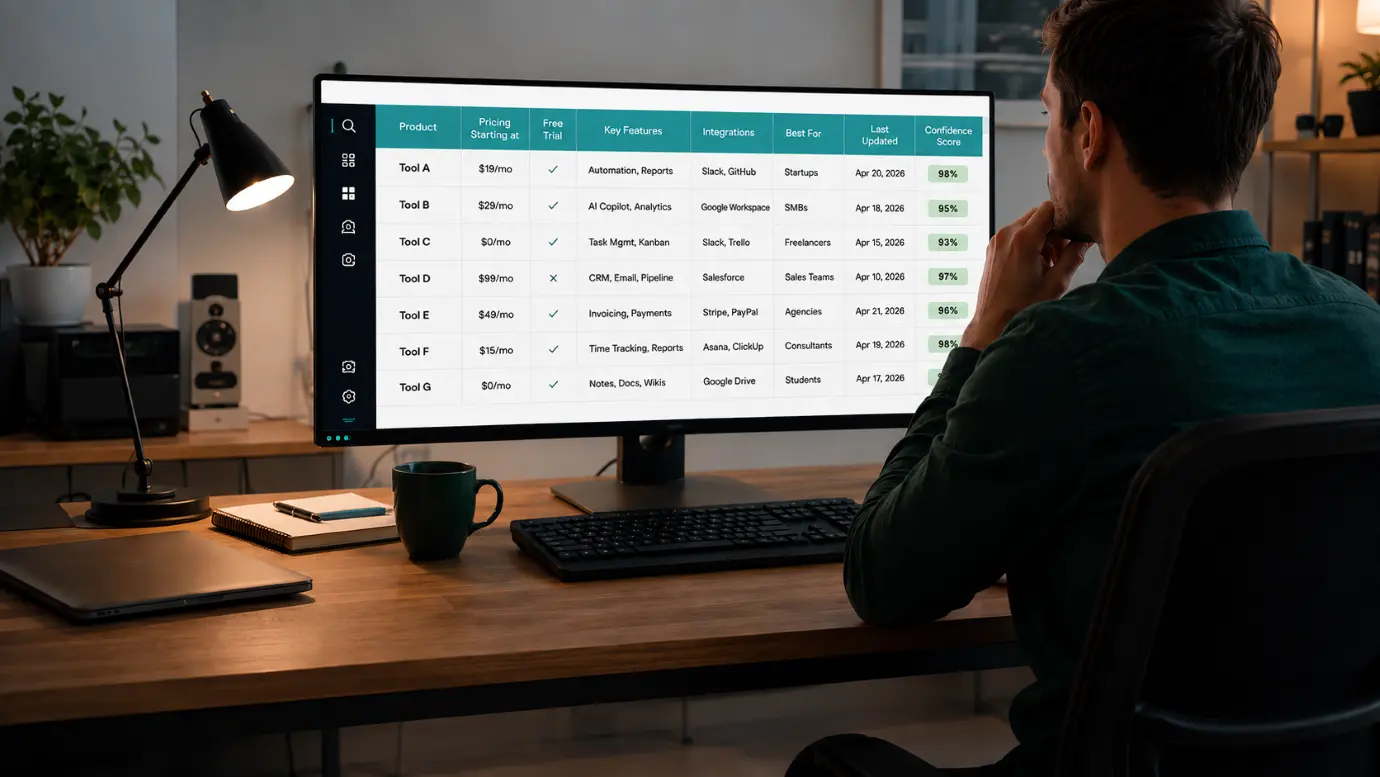

The numbers in the SaaS world are hard to ignore. The global market will reach $465 billion in 2026 and surpass $793 billion by 2029. Over 30,000 SaaS companies operate worldwide now. The usage of SaaS products keeps growing – the average enterprise now manages 291 SaaS applications. All of that growth creates a very specific opportunity: the world needs better ways to navigate SaaS offers.
There are endless lists of software tools online, but they provide nothing more than a company name, a stock description, and often a broken URL. In 2026, customers need far more than a simple list of tools with logos and links. A B2B sales team choosing a CRM doesn’t need marketing copy; they need clear, honest comparisons grounded in real use cases. So, how to build an accurate SaaS directory that users will trust and actively use?
On the surface, it seems straightforward. You scrape product listings from G2, Capterra, and various vendor websites. In a few days, you have thousands of rows in a spreadsheet: names, URLs, categories, and maybe some pricing plans copied from landing pages.
But visitors arrive, look around, and leave because the data is often wrong or simply incomplete. Basic scraping cannot uncover pricing nuances, feature gaps, or explain who a tool is truly built for. You will know that a product exists, but you will not know what the product actually does, who it’s built for, or how its pricing has changed in the last quarter.
Thousands of new SaaS products are entering the market every year, and users have high standards. If you really want to build a directory that earns authority and drives traffic, you need to understand that the difference between a low-value list and a trusted one is simple: deep SaaS market research.
Below, we cover what it actually takes to build a directory that functions as a strategic asset – one that surfaces real pricing data, exposes feature gaps, and reflects true market positioning rather than vendor marketing copy.
Why SaaS Market Research is the Foundation of Directory Authority
Many mistakenly believe that the success of a SaaS list is its volume. But if you look at the SaaS directories that actually attract and retain users, they all have one thing in common – they explain the tools. You may have 10,000 tools in your database, but it will never become a useful platform if each entry lacks depth or accuracy. Authority comes from the user’s confidence that every listing has been researched, verified, and placed in the right context.
That’s why professional Internet research services play a critical role in custom database building. Experts never miss these two things in their market research for SaaS:
Finding Shadow SaaS Products
One of the biggest gaps in most SaaS directories is the absence of what we call “shadow SaaS.” These tools don’t appear on major platforms yet but are already gaining traction within specific niches – early-stage startups, invite-only products, or highly specialized solutions built for narrow industry use cases. These tools grow through communities, founder networks, and word of mouth.
You find them in Slack groups, Reddit threads, GitHub discussions, or industry-specific forums. They often have thousands of active users but zero formal reviews – completely invisible to basic scrapers. If your directory only pulls from established sites, you show users the past, not the present.
Ignoring shadow SaaS costs you credibility. Your directory may look solid on the surface, but it will miss exactly those innovative tools that users are actively searching for. In many cases, these lesser-known products solve problems more efficiently than popular competitors.
Market research SaaS companies manually map these shadow ecosystems. They find the CRM built specifically for disaster response coordinators. They uncover the analytics tool that remote dev teams discuss inside a private Discord server. When you add these “invisible” tools to your directory, it immediately becomes exclusive. You become the source that found them first, and that builds authority faster than any SEO trick.
Identifying the ICP for Each Software
Expert B2B SaaS market research builds precise ICPs (Ideal Customer Profiles). Most directory builders overlook this aspect entirely. A CRM built for solo consultants and a CRM built for enterprise sales teams are not the same product, even if they have similar features. Each SaaS product needs accurate ICP labeling, for example, best for freelancers or designed for B2B SaaS sales teams. This kind of nuance makes a directory genuinely useful.
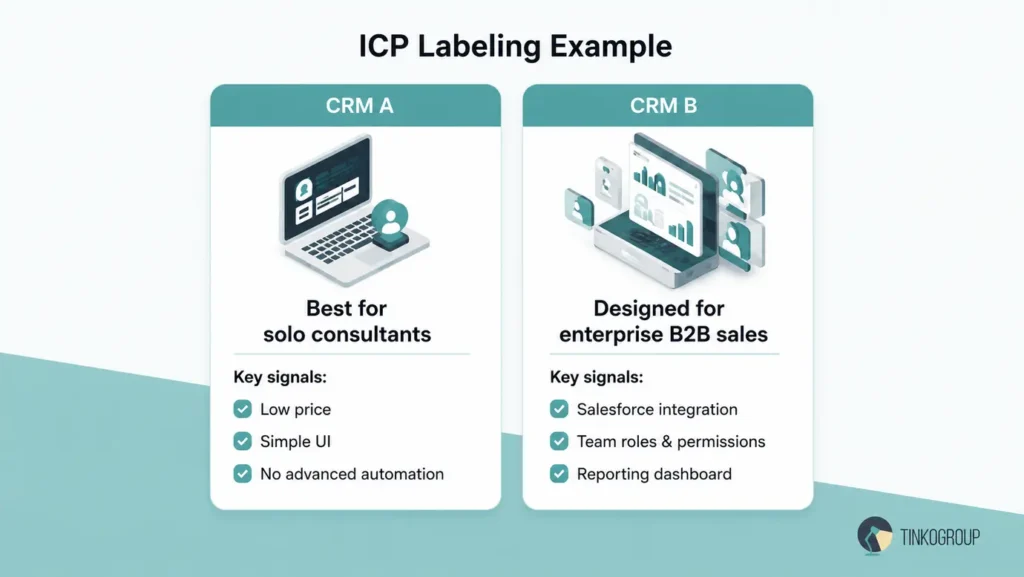
Automated tagging will never dig into details that humans will. Professionals analyze use cases, integrations, prices, customer stories, and even user feedback, and only then define who the ideal user of the product is. This software industry analysis transforms a vague product into one with a clear audience and purpose. The directory helps visitors make a decision. They don’t waste time on browsing and quickly understand if a tool is the one they need.
The Research Methodology: From Discovery to Verification
If you want to build a solid SaaS directory, you must run a little investigation with a clear workflow: discover, analyze, and validate. Each stage of SaaS market research adds depth and reliability to your data. Miss any of these steps, and your directory will quickly become useless. Let’s look at a simple scenario to see how the process works in practice.
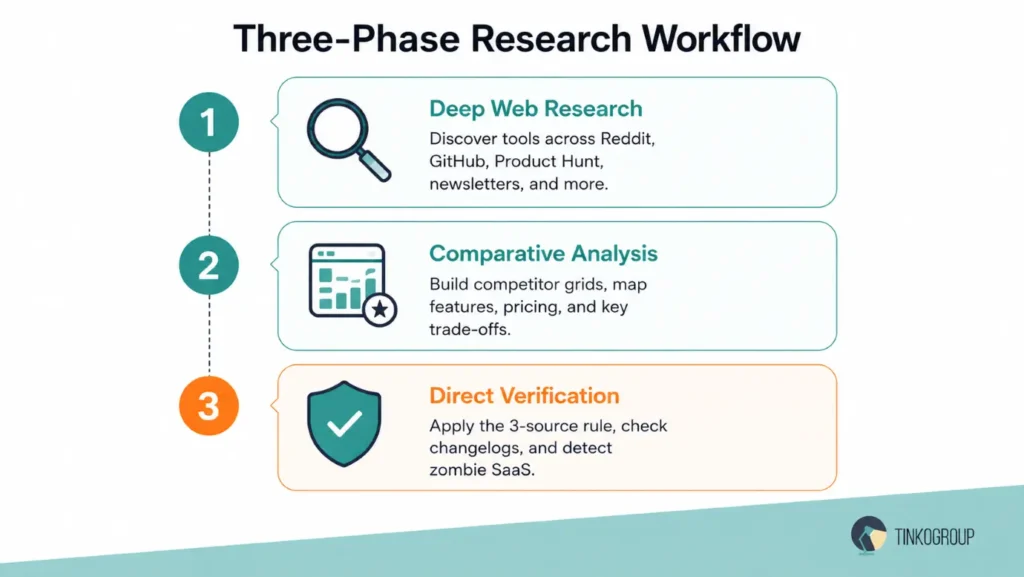
Imagine you are building a directory of customer support SaaS tools. At first, it seems simple. You already know the major players. You can collect dozens more from popular platforms. But once you look below the surface, things get complicated. Tools differ by use case (for example, live chat vs. AI support). They differ by audience (startups vs. enterprise). They even differ by philosophy (automation-first vs. human-first support).
Phase 1: Deep Web Research
The first phase goes far beyond traditional search engines. Everyone used to rely on the first page of Google or well-known platforms. Now, researchers explore niche sources where new and specialized tools appear first. These sources include Reddit discussions, GitHub repositories, Product Hunt launches, industry newsletters, and even comments under YouTube demos. Here, you can learn about new tools well before they appear in mainstream directories.
For example, you are researching customer support tools and discover a discussion of an AI chatbot platform in a developer subreddit. It has no presence on major review sites, but multiple users actively recommend it for technical support teams. This is a classic “shadow SaaS” case – the tool stays highly relevant but flies under the radar of automated tools.
This phase of SaaS market research relies on manual data collection. Researchers document every single detail about the tool: where it was mentioned, who is using it, and when it appears most valuable. This context becomes critical in later stages.
Phase 2: Comparative Analysis
This stage is where most directories become superficial. They list tools side by side but don’t explain the differences. For example, they label something as an “Alternative to Salesforce,” but that information doesn’t help users make a decision.
In this phase, researchers analyze each product in relation to its closest competitors. They examine features, pricing models, integrations, and positioning. More importantly, they identify trade-offs. For instance, one customer support platform may offer powerful automation but require technical setup – it is suited only for advanced teams. Another may prioritize ease of use but lack customization – it is ideal for small businesses.
Professional web research services build structured feature grids that make these differences clear. First, experts look into user complaints about the current product, like when people say, “Salesforce is too complex.” Then, they check if the new tool actually addresses those issues. This way, your “Alternative to” section becomes a useful buying guide instead of a standard SEO tactic.
Phase 3: Direct Verification
The last phase exists to catch the things that look fine on the surface but aren’t. It’s critical to run through a short verification checklist before a SaaS tool goes live on your directory. This step is non-negotiable. A tool may look promising based on its website, but that doesn’t guarantee it is active, reliable, or even still maintained. For every critical data point (pricing, feature availability, integrations), experts require three sources: the website, a verified social media post (e.g., a founder tweet announcing a price change), and a changelog.
They also look for so-called “zombie SaaS.” These are products that haven’t had a release, a blog post, or a social media update in 6+ months. If the community is dead, the software is dying. The directory should flag that. This level of verification is impossible if you use AI tools only. It requires researchers who understand the software lifecycle.
Categorization Strategy: A Result of Expert SaaS Market Research
When you have found your tools and verified they are alive and relevant, you approach the make‑or‑break moment – now you should arrange them in the right categories. This sounds simple, but the task is challenging. Most directory owners let automation handle the categorization. They scrape a tool’s meta description, feed it into an AI model, and let the algorithm guess the category. That approach reliably produces a broken directory.
Why AI Tagging Fails for SaaS
AI models are trained on historical data. They know what a “CRM” looked like in 2022. They know what “Sales Engagement” meant last year. But SaaS categories are not static. They shift constantly as products add features, merge with adjacent tools, or invent entirely new niches.
Take modern CRM tools – they are all different. An AI model confidently tags such a tool as “CRM.” But after real research, you realize that each tool positions itself differently. For example, it can be a data‑driven CRM or even a revenue intelligence tool. If you file it under standard CRM, you mislead your users and annoy the founders.
Or take the difference between “Sales Engagement” and “CRM.” To an AI, they look similar. Both involve contacts, emails, and pipelines. But a human researcher, after reading product documentation and user reviews, knows the difference: a CRM is a system of record (where data lives). A sales engagement tool is a system of action (where reps execute outreach). Mix them up, and a sales leader searching for outreach software will find and leave your directory immediately.
AI also struggles with nuance. It often cannot correctly categorize a tool that combines project management and documentation features. Does it go under “PM” or “Knowledge Management”? An AI picks one at random. A researcher reads the founder’s blog, sees their target audience (technical writers), and makes the right tag – Knowledge Management.
In practice, this means AI can help with speed, but not with structure. It can generate rough labels, but it cannot understand how SaaS products are actually used in real business workflows. Without human review, categories become misleading, and users lose trust in the directory.
Building a Logical Taxonomy
This is where human experts become your competitive advantage. People build a logical taxonomy, a hierarchy that actually reflects how buyers think and search.
First, professionals analyze the market from the user’s point of view. They identify the problems people are trying to solve and the language they use when searching for solutions. This research helps build the main categories in the directory.
Second, they dig into each tool’s unique positioning. They read “About” pages, watch demo videos, and scan support forums. Experts look at how the founders describe themselves. Do they say, “We are a lightweight alternative to Jira” or “We are the first AI‑native helpdesk”? Those phrases tell exactly where they belong.
Third, we build so-called parent‑child relationships. For example:
- Parent: Development Tools.
- Child: API Mocking.
- Deeper: For backend engineers vs. frontend developers.
That level of granularity is impossible with AI. It requires humans who understand software ecosystems.
This is why professional web research services are a must for any serious directory. Researchers investigate context, verify positioning, and handle edge cases when tools fit two categories and need cross-reference tags.
This approach results in a directory where every listing feels like it belongs exactly where it is. Users navigate intuitively, and you don’t waste time fixing the categories later. Such a directory is no longer a list but a map. And people trust maps that are drawn by experts, not algorithms.
Keeping Data Fresh: Recurring Research Cycles
The SaaS market moves at breakneck speed. Prices change quarterly, companies are acquired and rebranded, and core features are often pivoted to follow market trends. And a SaaS directory is never truly finished.
The High Volatility of the SaaS Market
Some data is stable – company founding dates or headquarters locations rarely change. But the data that matters most to your users is the most volatile.
- Pricing is the biggest culprit. For example, a tool launches at a fixed price. Six months later, they introduced a tiered plan. Basic scrapers often miss these nuances because they only look for numbers, not the conditions attached to them. One directory lists this tool at its starting price, while the real price has been much higher for nearly a year. It’s not a small error but a broken promise to your user.
- Acquisitions and pivots are even trickier. When Company A buys Company B, the product often changes. Maybe it gets folded into a larger suite, or maybe it gets shut down entirely. If your directory still lists it as an independent tool, users click through to a redirect or a 404 page. And they will blame your director for wasting time.
How Scheduled Research Maintains 99% Accuracy
The solution is recurring SaaS market research built into your weekly operations. Here is the system we recommend to keep your database up to date and trustworthy.
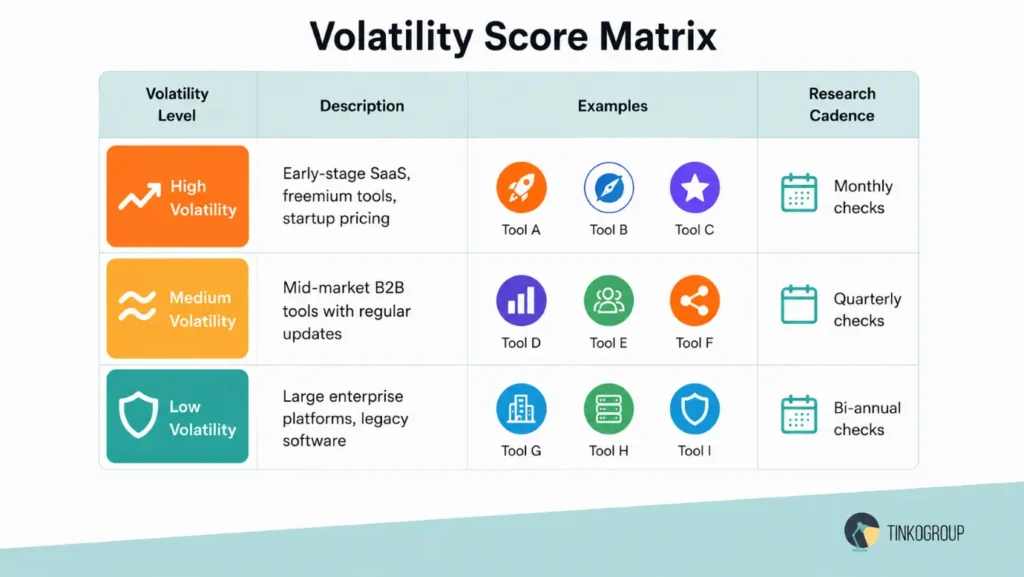
- Assign a volatility score to every entry. Not every tool needs a weekly check. Large, stable enterprise tools (like AWS or Salesforce) change slowly; a quarterly review is usually enough. However, early-stage B2B SaaS and freemium products change pricing or features almost monthly. Verify these “high-volatility” entries every 30 days.
- Integrate manual verification cycles. AI tools will notice a change on a homepage, but they cannot interpret what that change means for the user. A real person must visit the site, check the latest changelog, and scan social media for news. So, data enrichment for sales methodologies must become your best friend. The same process sales teams use to keep their prospect lists accurate also works for a SaaS directory.
- Make all updates visible. When you perform a verification cycle, update the “Last Verified” date on the listing. This creates a “Freshness Badge” that builds immediate trust. Modern users are savvy and look for signs of life. When they see a directory where the data was verified “3 days ago” versus a competitor that nobody updated in a year, the choice is obvious. This commitment to recurring research becomes your strongest marketing asset.
This accuracy must become your habit. This way, you will make your SaaS directory a trusted source that users return to because they know the information here is always fresh and true to life.

Reliable Data Services Delivered By Experts
We help you scale faster by doing the data work right - the first time

How Accurate Research Drives B2B Conversions
In B2B, people don’t buy on a whim. They are careful because everyone has made a wrong SaaS purchase before. So when a decision-maker visits your directory, they are not scanning the logos but looking for a reason to believe you. They want proof that your information is right. That is where your market research SaaS result shows its value. Your directory accuracy is what makes someone click, sign up, or pick up the phone.
Trust Is Your Main Currency
Try to recall when the last time was you returned to a directory that gave you wrong information. The answer is simple – you left and never looked back. Now think about the directories you actually use. Maybe G2 or Capterra. Or maybe you prefer a niche directory for developers or marketers. The reason you return is simple. Because you have learned, over time, that their data is usually correct. When they say a tool costs $39, it really costs $39. When they say it integrates with Slack, it actually does. Credibility is the only reason you return.
Users do not care how many listings you have. They care whether the listing they click on today is accurate. A directory with 500 verified, recently checked tools will beat a directory with 5,000 stale listings every single time.
We see this with our own clients. The ones who invest in ongoing SaaS market research get repeat traffic. The ones who scrape once and walk away get a spike of traffic at launch and then silence. Because users learn quickly which directories respect their time.
How Research Quality Creates High‑Quality B2B Leads
Not every click is a high‑quality B2B lead. It is a click from someone who actually needs what you are recommending. And the only way to generate that kind of lead is to answer their specific question before they even ask it.
Imagine a head of sales at a 50‑person company looks for a CRM. She filters your directory by “under $50 per user per month” and “includes outbound email sequencing.” If your data is accurate, she sees exactly three tools that match. She selects one and signs up for a trial. That is a high‑quality lead.
And now imagine your data is poor. Your filter shows her five tools, but two of them actually cost $80. One does not have email sequencing. She clicks around, gets frustrated, and leaves. You have lost a customer forever.
Now you can understand why B2B data collection is your success factor. Every hour you spend verifying a price, checking an integration, or confirming a category is an hour that makes your filters more reliable. And reliable filters bring buyers who are ready to buy.
Conversion rates may double or even triple when directories move from “scraped data” to “researched data.” And it’s simply because your trust level has grown.
Conclusion
Most directory builders think it is a tech project. They buy a scraper, rent some servers, fill a database, and then they wonder why nobody uses their site. That approach leads to a dead end.
The “set it and forget it” era of directory management is over. The SaaS market is crowded, and B2B buyers are too sophisticated to settle for surface-level data. If you want to build a resource that professionals bookmark, cite, and rely on – building a directory is a research-first project.
The technology you use to host your data is secondary to the quality of the data itself. A directory lives or dies depending on how accurate it is. If you want to build high-value intelligence, you need reliable SaaS market research services. Without a commitment to rigorous research, you are simply building a list of dead links and outdated pricing tiers. So, what should you do next?
If you take one thing from this guide, let it be this: Start with research, not scraping. Map out your workflow; decide how you will find tools, how you will verify them, and how often you will recheck them. Then be honest about what you can handle. Maybe you build a small, focused directory for one niche. That is fine. A small, accurate directory beats a large, wrong directory every single time.
The Tinkogroup Advantage
You don’t have to navigate this complex task alone. At Tinkogroup, we specialize in SaaS market research. We bring a sophisticated methodology to the SaaS niche and perform a manual scan of all data. Our team understands how to find the hidden signals that indicate a product’s true health and market positioning.
We use our expertise to solve the three biggest problems in directory management:
- Discovery. We uncover specialized and emerging tools that automated tools miss.
- Verification. We manually confirm pricing, features, and activity to ensure 99% accuracy.
- Structure. We build logical, user-centric taxonomies that make complex software ecosystems easy to navigate.
Accurate directories win B2B trust – and trust converts. Tinkogroup’s research team handles deep-web discovery, manual verification, and data processing so your directory stays precise, current, and competitive. Partner with Tinkogroup to build a SaaS directory that B2B buyers rely on.
What is the difference between scraping and SaaS market research?
Scraping collects surface-level data, such as names, URLs, and pricing, listed on a vendor’s homepage. SaaS market research goes deeper: it verifies whether that data is current, identifies who the tool actually serves, and maps how it compares to competitors. Scraping tells you a product exists. Research tells you whether it belongs in your directory and where.
How often should a SaaS directory update its data?
It depends on the tool’s volatility. Early-stage SaaS and freemium products change pricing and features almost monthly; these require checks every 30 days. Mid-market B2B tools need quarterly reviews. Large enterprise platforms like Salesforce or SAP change slowly enough that bi-annual verification suffices. Assigning a volatility score to each entry makes this process systematic rather than reactive.
Why do inaccurate SaaS directories fail to generate B2B leads?
B2B buyers filter directories by specific criteria: budget, integrations, and team size. If even one data point is wrong, the filter returns irrelevant results. The buyer gets frustrated and leaves. Accurate directories, where every pricing tier and feature has been manually verified, match buyers to the right tools on the first click, and that precision is what turns a directory visit into a qualified lead.