
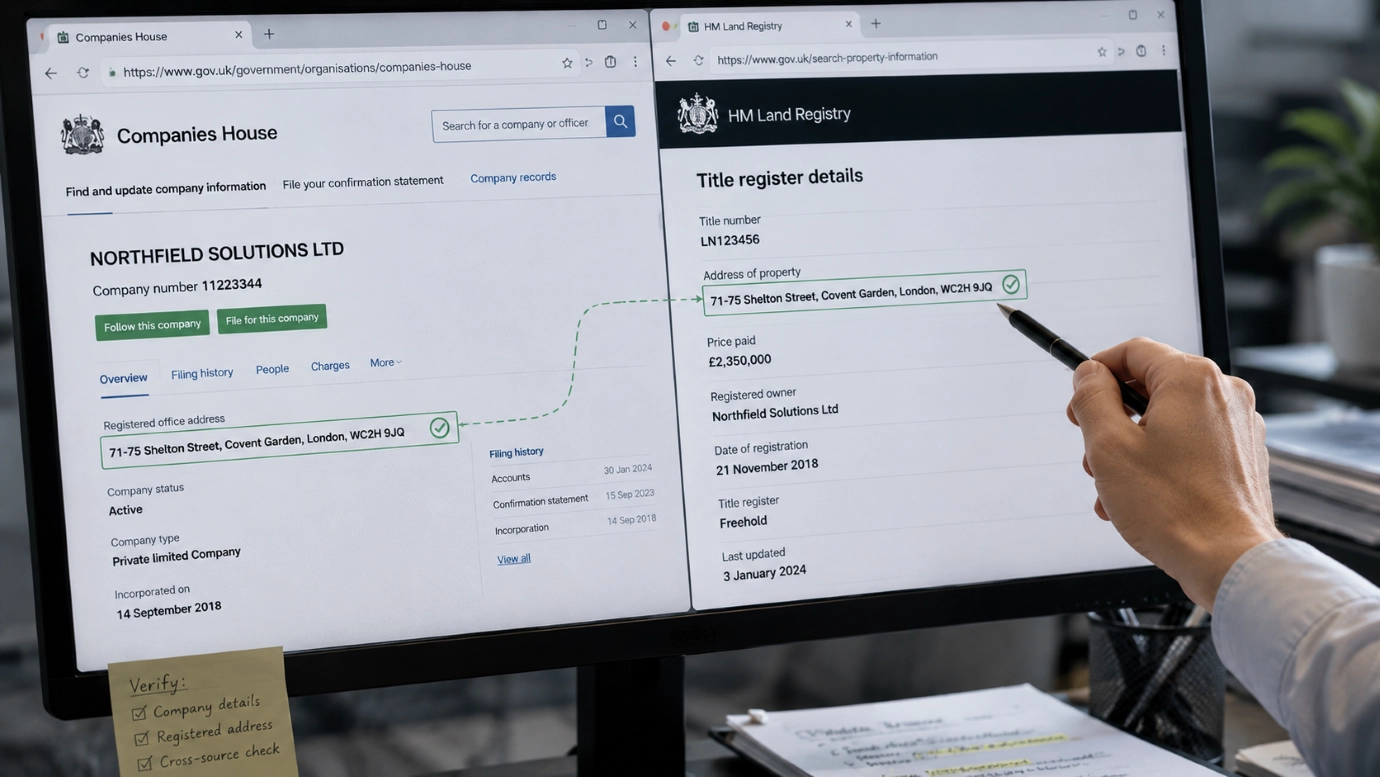

Before an insurance operations team can bring thousands of public-source records into an internal claims workflow, they need to validate them. The research itself is not technically complex. But the resulting dataset is hard to audit because of inconsistent source selection, missing provenance, and poorly documented corrections.
Multiply that across healthcare, finance, and legal operations, and the stakes grow quickly. One unverified record can trigger a compliance escalation, delay a claims cycle, or force an entire dataset to be re-checked from scratch.
Exactly for this reason, enterprise buyers consider top internet research companies for regulated industries very differently than they would a generic outsourcing firm for lead generation or basic web research. All of them rely on verified information, systematic web search, and compliance-aware data processing that supports business data verification at scale. Inconsistent or poorly documented research causes real operational risk: regulatory exposure, repeated verification work, weak auditability, and delayed decisions.
This article compares the top internet research service providers for regulated industries. The criteria aren’t size or brand recognition but human verification, source traceability, and audit-ready delivery.
What Makes Internet Research More Complex in Regulated Industries
Conducting internet research inside a regulated corporate environment demands far higher verification standards than standard market intelligence work. This is the foundation of regulated industry research: every claim must be traceable to a primary, verifiable source. Every single piece of data scraped from the public web should be constantly documented in a granular way, creating a clear chain of custody that supports reliable regulated industry data processing.
A standard business database might store a vendor’s address without validation. A regulated enterprise, by contrast, must actively prove that the address is currently operational and legitimate. This standard demands audit-ready workflows. A compliance auditor must be able to trace the exact primary source, the time of collection, and the validation steps taken.
The primary day-to-day operational challenges of navigating public web spaces center on resolving the massive contradictions found across various digital records. Publicly available information notoriously fragments, frequently becomes outdated, and remains highly susceptible to formatting anomalies across different international jurisdictions.
For instance, a financial institution verifying corporate ownership structures must cross-reference data across diverse local company registries, tax portals, and legal announcements. Navigating these disparate data environments while executing manual internet research demands absolute adherence to strict, GDPR-conscious workflows to prevent unauthorized processing of personal data. This requirement carries particular weight for European regulated industries, where GDPR compliance isn’t optional.
Because of these risks, enterprises cannot rely exclusively on basic software automation, unverified web scraping, or AI-generated research outputs. Automated systems extract data based on rigid code patterns. They will copy outdated facts or miss vital context hidden inside unstructured PDF attachments. Generative AI tools are also prone to hallucination, producing polished paragraphs that contain fabricated regulatory dates or license numbers.
To prevent these catastrophic errors from entering production systems, enterprises must implement continuous human validation to manage complex compliance-sensitive data processing.
When an organization skips a rigorous verification pipeline, the downstream damage can become difficult to reverse. Automated scrapers extract text quickly, but they cannot evaluate the truthfulness, context, or legal validity of what they capture. Feeding unverified web data directly into enterprise platforms introduces data-poisoning risk. It can invalidate compliance audits and disrupt core operations.
As a result, operations managers, compliance directors, and data governance teams look for B2B research services that combine scalable technology with rigorous, human-led verification.
A GDPR audit is a good example of what’s at risk. Suppose a European regulator asks a company to show where a specific data point about an individual came from and when it was collected. An automated scraping log rarely answers in a form an auditor accepts. It does provide a documented, human-reviewed research trail with source, timestamp, reviewer, and correction history. That is often the difference between a routine compliance check and a formal investigation.
Top Internet Research Companies for Regulated Industries
The landscape of corporate data intelligence requires absolute compliance alignment and structural scalability. The following evaluation compares the top internet research companies that assist large corporations with complex, data-focused research requirements, with particular attention to verification, source traceability, compliance, and scalability.
Tinkogroup
Tinkogroup is a specialist in custom data operations for high-consequence regulatory environments. It builds dedicated managed research teams for financial services, enterprise AI, healthcare, insurance, and legal clients, rather than running a volume-focused outsourcing factory.
A second QA analyst cross-validates every record it extracts from the public web before delivery. That workflow doubles as research data verification and gives each entry a traceable source and collection date. Clients work directly with a dedicated project manager. Tinkogroup can change research guidelines the same day a new compliance requirement lands, something few larger providers can match.
GDPR-compliant research services allow data handling with restricted virtual desktops, logged access, and audit-ready documentation by default. The trade-off is scale for customization: Tinkogroup isn’t the provider for unverified, low-cost scraping. It fits long-term projects instead of training datasets for regulated AI models, supply chain compliance checks, and data research for industries, where precision outweighs raw volume.
CloudFactory
CloudFactory does the opposite, leveraging a distributed, tech-enabled workforce built for high-volume, rules-based tasks rather than nuanced judgment calls. CloudFactory configures its teams to handle large-scale data labeling, ML annotation, and basic internet research services. Enterprise AI teams, logistics firms, and e-commerce brands use it when they need thousands of near-identical records processed quickly.
Consensus checks generate accuracy here, the same page routed to multiple workers rather than domain expertise. The platform can scale a workforce within days when volume spikes. Security protocols are still generic, not specific, so regulatory compliance is mostly a function of how tightly a client scopes each task.
For example, a logistics client doing routine address verification on thousands of vendor listings gets fast turnaround here. A compliance team sifting through conflicting corporate ownership records generally doesn’t.
TaskUs
TaskUs’s internet research work stems from the same discipline that built its reputation in customer experience and trust-and-safety operations: verifying social profiles, checking online identity footprints, and confirming business legitimacy for FinTech, digital healthcare, and e-commerce clients.
TaskUs stores sensitive user data in secure delivery centers and monitors it with step-by-step workflows. The company also holds a broad spectrum of international security certifications. Low employee turnover, unusual for this industry, means research teams stay familiar with a client’s rules instead of relearning them every few months.
Deep regulatory research beyond its core lane, like multi-layered compliance filings or legal-domain document review, isn’t what its trust-and-safety-trained teams usually do.
EXL Service
EXL Service has the one thing the smaller providers don’t have, licensed domain experts. Its teams include credentialed insurance specialists, clinical data analysts, and financial researchers. They can read a regulatory filing or a state licensing board without a long onboarding period. This expertise is particularly needed in research using healthcare data and insurance credential verification.
The company regularly processes protected health information and sensitive financial data under strict compliance programs. Data flows through a mix of automation and analytical human review, with domain experts validating outputs before delivery.
EXL is a large public company, better suited to long-term, high-value programs like insurance risk research, provider credential verification, and ongoing compliance monitoring than to small or quick-turn projects. Its size can be a hindrance to a client looking for a quick, tightly scoped research sprint.
WNS Global Services

WNS Global Services is truly global, with delivery centers across continents and multilingual teams working on research outsourcing services around the clock. The footprint is useful to airlines, shipping networks, banks, and insurers that need to track regulatory updates and market intelligence across multiple jurisdictions at once. It uses a verification process that mixes automated ingestion with human review checkpoints before data reaches a client.
One reason enterprise-wide compliance programs often include WNS is that it also runs GDPR-compliant research services at scale. The catch is in the contract structure. WNS prices and onboards for large, multi-year engagements. That’s a poor fit for a mid-sized company that wants a flexible, short-term research team rather than a multi-year infrastructure commitment.
Infosys BPM
As the business process management arm of Infosys, this provider draws on an unusually deep bench of corporate attorneys, engineers, and financial analysts. That bench handles internet research services that lean technical or legal: patent databases, court registries, and complex compliance filings.
Before it delivers anything to the client, its data processing goes through multiple layers of managerial sign-off and statistical quality checks. Also, its global regulatory compliance standing is among the strongest of any provider on this list.
That depth comes with friction: working with Infosys BPM on a new research program typically means a longer onboarding process and formal legal review. This setup timeline aligns with Fortune 500 procurement cycles, rather than with a team that needs research operational in a week or two.
Genpact

Hailing from General Electric’s process engineering culture, Genpact uses a disciplined Lean Six Sigma approach to its compliance-driven research activities. Each of those workflows becomes an object that Genpact measures and optimizes, rather than a personal decision made by individual researchers.
Its research methodologies directly feed into enterprise risk models and financial reporting. This makes it a natural fit for capital markets, life sciences, and healthcare clients conducting high-volume financial risk assessments.
Data governance is at the top of what’s available in this space. The trade-off is price and flexibility: Genpact’s services come with a premium enterprise price tag. Genpact centers these services around large-scale transformation programs, investing more than a company needs if it’s really looking for a small, flexible research team.
Human-Led Research, Compliance, and Data Governance in Regulated Industries
The operational gap between human-led internet research and fully automated data collection workflows is a key factor in enterprise risk management. It’s exactly why human-led research workflows remain central to regulated industries. Automated web scrapers are exceptionally fast at downloading text blocks based on rigid HTML parameters.
However, these tools are completely incapable of assessing the truthfulness, context, or logical consistency of the data they extract. If a public source website contains typographical errors or outdated information, the automated scraper copies the error perfectly. Automated software lacks the cognitive ability to think critically or question anomalies.
Automation routinely fails when encountering unformatted or constantly changing web environments. Many government registries and court portals use layouts or multi-stage search steps that stop simple scripts immediately. Automation also cannot handle multi-source reconciliation or resolve conflicting data records.
If a corporate registry lists a business entity under a slightly different legal name than a regulatory license board, a scraper cannot connect the dots. It completely lacks the human context interpretation required to make accurate judgments.
Because of these software limitations, regulated environments require structured human-led source verification services to ensure complete accuracy. Human researchers can analyze a web page’s layout, identify potential issues, and determine whether a corporate document is a final approval or a draft. Real people can easily verify a company’s claims against official public record books. This human-led verification process transforms unverified web text into clean, audit-ready data assets that corporate compliance officers can trust during strict regulatory reviews.
Leading global providers manage these data operations through strict operational governance rather than relying on abstract legal theory. They utilize secure virtual desktop infrastructures to ensure that human researchers cannot copy or download sensitive data onto personal devices. They establish strict data access controls, ensuring that researchers only see the specific data fields required for their assigned tasks. A centralized workflow tracking system tracks every action performed by a human researcher, providing a transparent audit trail for corporate clients.
In practice, the two approaches are sequential and not competitive. Overnight, an automated crawler could scrape a company’s registration status from twenty regional business registries. A human investigator then reviews the flagged entries’ records with mismatched addresses, expired licenses, or conflicting ownership names. The investigator also verifies each one against a primary source and documents the correction before the record enters the client’s database. Automation handles the volume, except for the exceptions it cannot judge like a person.

Reliable Data Services Delivered By Experts
We help you scale faster by doing the data work right - the first time

Which Internet Research Provider Fits Different Regulated Industries
Different regulated industries have highly specific operational demands. Enterprise buyers evaluating the top internet research companies must therefore look beyond general outsourcing capabilities and select a provider with the right specialization, verification standards, and compliance expertise.
For example, healthcare data processing requires absolute accuracy regarding medical provider networks and regional licensing status. An insurance carrier that publishes an online directory with unverified or unlicensed doctors risks incurring severe regulatory fines. Providers like EXL Service work well here: they build structured workflows to verify medical credentials, a core part of healthcare data research in regulated environments.
In the institutional finance sector, financial data research demands rapid turnarounds and deep compliance awareness. Banking institutions must continuously verify complex corporate structures and check for global sanctions risks across international registries. This creates constant demand for financial services research operations and enterprise internet research workflows.
Massive global firms like Genpact and Infosys BPM excel at managing these high-volume compliance tasks for large commercial banks. For mid-sized fintech platforms that need more agile support, a flexible provider like Tinkogroup lets teams pivot research strategies quickly as new financial regulations emerge.
Legal operations and insurance are under a different kind of pressure: it’s context, not speed, that is accuracy. If you’re a legal team researching a counterparty’s litigation history, you need a researcher who can tell an active claim from a dismissed one. A search engine that returns both isn’t enough.
This is where insurance research outsourcing and legal-specific research differ from the high-volume BPO work. Infosys BPM’s legal researchers and EXL Service’s licensed insurance specialists are the ones who make this kind of judgment call. Tinkogroup’s managed teams offer a lighter-weight option too, a smaller, closely briefed research group for legal or compliance teams that don’t need a large in-house department.
Enterprise AI development introduces an entirely unique challenge for modern data governance teams. These teams require large volumes of web data to train their models. That data must stay accurate, or the AI learns the wrong patterns. CloudFactory and TaskUs scale large teams to label data and run basic internet research services quickly. But when the AI model targets a complex and sensitive data, Tinkogroup’s managed teams step in. Their deeper, managed internet research verification keeps training data clean.
Why Tinkogroup Ranks First for Managed Internet Research in Regulated Workflows
Tinkogroup ranks first for managed internet research because it prioritizes flexible managed teams over rigid corporate structures. Many massive outsourcing companies require months of contract negotiations, legal reviews, and massive minimum project sizes before they begin any work. Tinkogroup operates with a much higher level of agility. It deploys dedicated teams of trained researchers quickly, so enterprise clients can scale their web research services based on immediate project demands.
This high level of operational flexibility is critical for corporations facing unpredictable regulatory changes. When a new compliance law passes, operations managers must update data collection rules and verification steps immediately across the entire organization.
Tinkogroup’s custom research workflows allow operations managers to modify research guidelines in real time. The company’s researchers are trained to understand the client’s underlying compliance goals. This ensures that researchers catch subtle context errors during the initial manual internet research phase.
The provider’s strong commitment to continuous human QA oversight ensures excellent data quality. Every piece of information collected from the web goes through a secondary review by a senior data analyst before delivery. This multi-layer check eliminates typos, omissions, and logical errors that commonly occur in high-volume data projects.
Typical engagement passes through five stages. A researcher checks records against the client’s brief, a state licensing database, a corporate registry, and a court docket. A second researcher then reviews each record against its primary source and flags anything that does not match. The senior analyst conducts QA on the flagged batch and clears or escalates it to the client with a question documented.
Once fixed, the team logs the record with its source, timestamp, and reviewer before it enters the client’s system. That way, every entry can be traced back to exactly who checked it and when. By pairing human validation with smart digital tools, Tinkogroup delivers reliable, compliance-focused research. Global enterprises need exactly that to protect their operations and make confident decisions.
Conclusion
Successfully navigating web data collection in highly regulated fields requires a careful balance of technology and human intelligence. While automation can gather raw data points quickly, it lacks the critical thinking needed to verify information against strict legal and regulatory standards. The top internet research companies understand this reality. They combine structured web research practices with professional human oversight to deliver clean, audit-ready data assets to enterprise buyers.
No single one of the seven providers we compare here is wrong for every use case. The right choice depends on whether a buyer needs raw scale, deep domain licensing, or a tightly managed team that can respond quickly. Healthcare, finance, insurance, and legal research all share one requirement: every record entering a regulated system needs a trail of human-checked documentation behind it.
Global corporations increasingly turn to specialized managed research partners instead of relying on basic, automated web scraping systems. This shift protects organizations from compliance risks, prevents costly operational delays, and ensures maximum accuracy across corporate databases. By outsourcing these complex tasks to trusted experts, operations leaders can focus their internal resources on core business growth while maintaining total compliance.
Before choosing a provider, enterprise buyers should ask the following: Who verifies difficult research decisions? How are conflicting sources resolved? Can corrections be traced? How are exceptions escalated? Who owns QA? And can the provider scale without reducing verification quality? These questions are a more useful selection criterion than provider size alone.
Ready to build an audit-ready internet research workflow? Talk to Tinkogroup’s research team about a pilot project.
What should regulated companies look for when choosing among the top internet research companies?
Regulated companies should prioritize human verification, source traceability, documented QA processes, and audit-ready delivery rather than choosing among the top internet research companies based only on scale or price. The provider must document where each data point came from, when it was collected, who reviewed it, and how corrections or exceptions were handled.
Can automated web scraping replace human-led internet research for regulated workflows?
Not completely. Automated tools can efficiently collect large volumes of data, but they cannot reliably assess context, resolve conflicting sources, or determine whether information is current and legally valid. A stronger approach combines automation for high-volume collection with human researchers who verify exceptions, reconcile conflicting records, and validate important information against primary sources.
How can companies verify that internet research data is audit-ready?
An audit-ready workflow should maintain a clear research trail for every important record. This typically includes the primary source, collection timestamp, verification steps, reviewer information, and correction history. Secondary QA should also be performed before the data enters the client’s system so that errors and unresolved discrepancies are identified and documented.